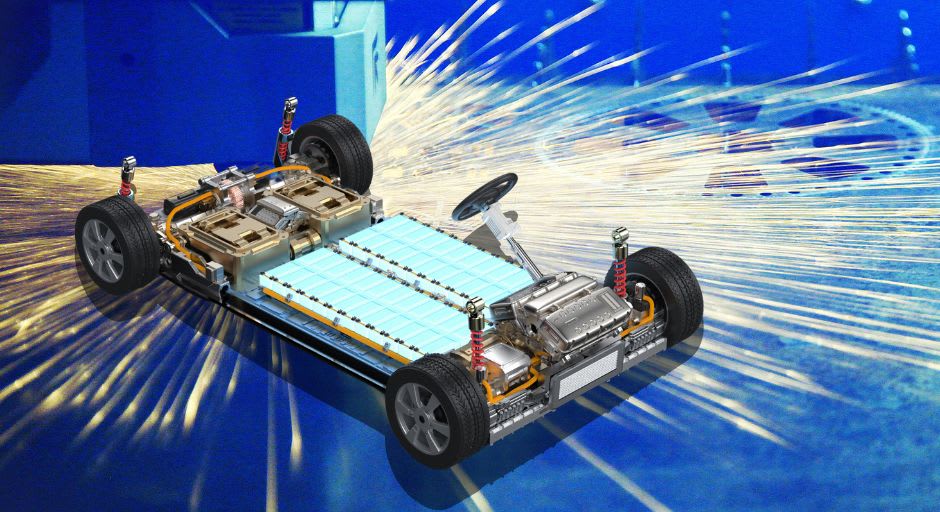
The electric car market is booming, driven by the transition to more sustainable mobility. According to market projections, global EV production is expected to grow rapidly over the next decade.
This shift is forcing metal auto parts manufacturers to rethink their design and manufacturing processes to meet the specific needs of these vehicles.
One of the main challenges is creating metal components that interact directly with electric batteries. These components require unique characteristics in terms of materials, treatments, and coatings.
Battery support trays, protection frames, heat sinks, connection terminals, metal conduits, electromagnetic shielding panels, and structural supports are among electric vehicles’ most relevant metal components.
These elements are critical for their mechanical function and for ensuring the battery system's safety, thermal efficiency, and electrical integrity.
Necessary treatments and coatings
Each metal component close to batteries requires specialized treatments to meet environmental demands and safety standards. One such treatment is corrosion resistance. Since these components are exposed to extreme humidity and temperature conditions, protective coatings such as galvanizing, anodizing, or epoxy coatings are essential. For example, battery support trays are often treated with hot-dip galvanizing to prevent rust and improve their durability.
Another important one is thermal insulation. In this case, heat sinks and cases in direct contact with the battery must incorporate ceramic coatings that reduce heat transfer and maintain a stable temperature.
Electrical conductivity must also be considered, so connection terminals require finishes such as silver or nickel plating to improve conductivity and prevent the formation of oxides that may interfere with current flow.
Likewise, as with structural supports, many components must undergo processes such as nitriding or cementing to increase their resistance to wear caused by movements or vibrations.
Another crucial aspect is fire protection. Intumescent coatings, which expand when exposed to high temperatures, improve it. Due to the risk of overheating or battery failure, this is now a requirement for some critical components.
Adaptation
The need to manufacture metal components with these characteristics will force manufacturers to adapt their production processes. Companies must invest in advanced coatings technology, precision machinery, and stricter quality controls to meet EV industry standards.
In addition, trends towards sustainability in manufacturing also influence the development of new processes. For example, integrating metal recycling techniques and using lighter, more recyclable alloys are becoming relevant. Implementing technologies such as 3D printing for prototyping metal components is also gaining traction, allowing design optimization and cost reduction.
The evolution towards electric mobility transforms vehicles and redefines the automotive industry's manufacturing needs. For metal auto parts manufacturers, this transition presents an opportunity for growth but also requires a commitment to innovation.
Modifying manufacturing processes to meet the demands of electric vehicles, especially for components close to batteries, is not optional but necessary.
Companies that lead in implementing new technologies and specialized coatings will have a significant competitive advantage in this rapidly expanding market. Thus, they will not only contribute to the success of electric cars but also ensure their relevance to the future of the automotive industry in Mexico.
BOX
Some key metal components for electric cars
Battery support trays: These parts, usually made of steel or aluminum, hold and protect the battery against shock and vibration. Because they are directly in contact with the battery, they must be corrosion-resistant, lightweight, and able to withstand high temperatures.
Protective frames are essential for protecting the battery from external forces and distributing mechanical loads. They are made of aluminum or stainless-steel alloys, which combine strength with low weight.
Heat sinks: Electric vehicles generate considerable heat, especially during charging and heavy use. Aluminum or copper heat sinks are crucial for keeping the battery within a safe temperature range.
Connection terminals: Made of copper or conductive alloys, these terminals ensure efficient energy transfer between the battery and the vehicle's electrical system.
Metal pipes: These stainless steel or aluminum pipes or channels conduct cooling fluids or gases, maintaining an optimal environment for battery operation.
Electromagnetic shielding panels: Made of nickel or copper alloys, they protect the vehicle's electrical systems against electromagnetic interference (EMI).
Structural supports: Made of high-strength steel, they stabilize and secure the components in position.