Clamping is a fundamental process in metalworking. It ensures stability and precision during metal forming, bending, and cutting. Historically, clamping techniques have relied on mechanical, hydraulic, or pneumatic systems.
Recent technological advances are driving the use of electrical clamping systems as part of this evolution. This option could substantially change how companies approach efficiency and accuracy in their processes.
While affordable, manual clamping systems often require extensive operator intervention and are less time-efficient.
With the industry's rise in automation, companies began to adopt hydraulic and pneumatic systems, which offered higher speed and less manual effort.
While they have advantages, these systems have limitations, such as continuous power consumption at rest and the need for frequent maintenance due to leakage and wear and tear.
Considering the above aspects, electrical technology has emerged as an efficient and sustainable solution for clamping functions in critical processes such as bending metal parts, stamping, and manufacturing industrial components.
You may be interested in: Adapting metal components for electric cars
Better control
Electrical clamping systems use DC motors and screw mechanisms to clamp tools and workpieces with pinpoint accuracy.
Unlike hydraulic systems, they do not require oils or fluids, making them less prone to leaks and more environmentally friendly. In addition, they integrate sensors and indicator lights that make it easy to monitor the condition of the fastening, eliminating uncertainty for the operator.
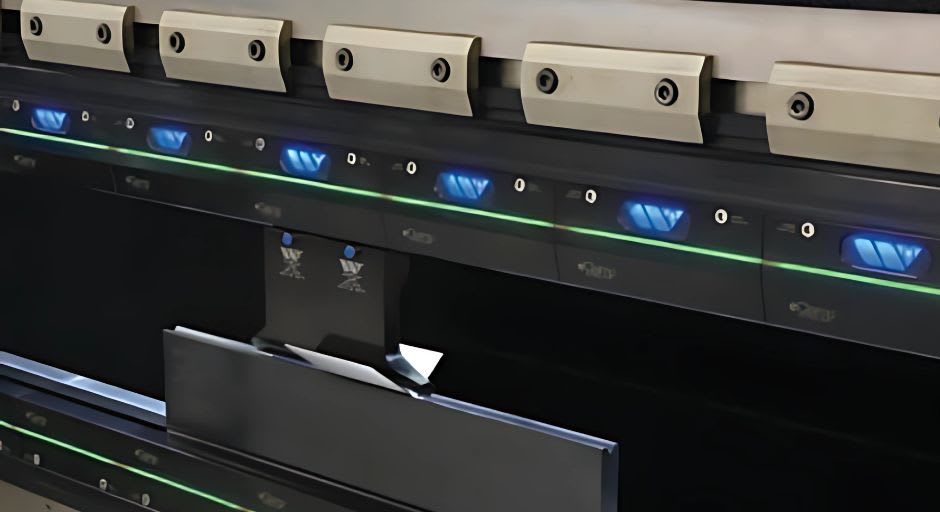
The eClamp system, for example, is an electric clamping solution from Wilson Tool designed to improve press brake accuracy and efficiency. Its operation is based on a modular, all-electric design that uses standard current available in any workshop.
Unlike traditional hydraulic or pneumatic systems, the eClamp secures tools mechanically, eliminating the use of expandable urethane tubing. A stand-alone controller integrated into the machine control can install this system on new, used, or existing machines.
The system has integrated LED lights that directly illuminate the work surface, facilitating visibility of the operating area. In addition, it has LED indicators that allow the operator to visually check if the tools are appropriately clamped, reducing uncertainty and improving operational safety.
The modularity of the system bodies allows for the creation of solid or segmented top beams in 21.25 mm increments, with greater flexibility to accommodate different tool configurations.
These systems are easier to maintain and compatible with American or WT-style precision tools. The clamping bodies can be easily changed to suit the desired tool type. This design gives them greater versatility and efficiency, enabling them to modernize press brakes and improve workshop productivity.
The transition to electric clamping systems reflects a broader industry shift toward automation and sustainability. These systems improve efficiency and accuracy, making it easier for new generations of less experienced operators to adapt. By incorporating more intuitive technologies, companies can reduce training times and maintain high productivity.
The evolution of fastening in metalworking is a clear example of how technological innovation can transform traditional processes, creating solutions that benefit companies and the environment. With its balance between efficiency, precision, and sustainability, electrical clamping promises to be the direction for this niche in the coming years.
Benefits of Electrical Restraint
Operational efficiency:
The electric clamping significantly reduces setup times, going from minutes to seconds in many cases.
Allows for quick tool changes without auxiliary tools or complex manual adjustments.
Accuracy and repeatability:
Electrical systems ensure an even distribution of clamping force, eliminating defects caused by pressure variation in the tools.
They integrate advanced monitoring technologies that ensure tools are correctly secured before starting the process.
Sustainability:
By not using hydraulic fluids, they eliminate hazardous waste generation and reduce environmental impact.
They consume energy only during adjustment or movement, unlike hydraulic systems that require constant power.
Easy maintenance:
Electrical system components are modular and easy to replace, minimizing downtime during failures.
Adaptability and flexibility:
They can be integrated into old presses and machines, upgrading them to meet modern production standards.