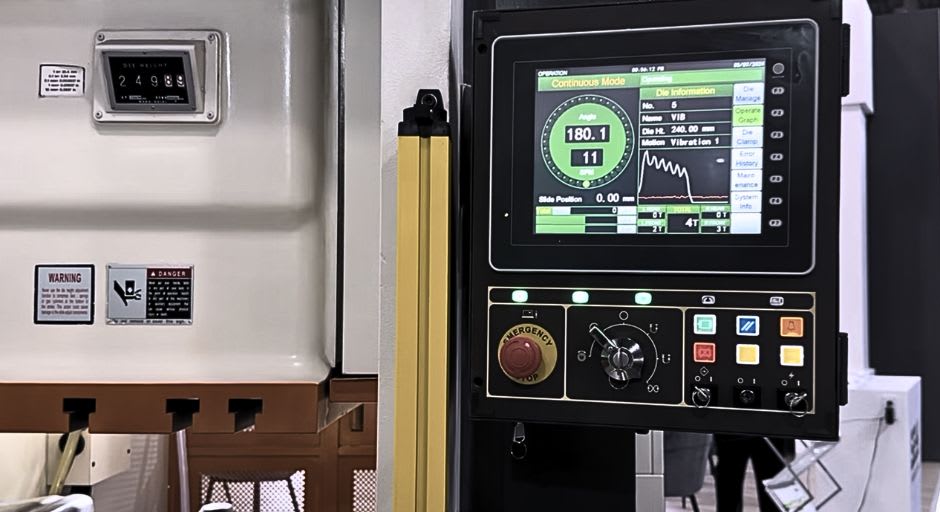
For people who have been in the industry for a few years now, the transformation that metal stamping has undergone is evident. From the days when the process relied on mechanical presses to the sophistication of servo-controlled systems, the evolution has been undeniable. At FABTECH Mexico 2024, it was possible to observe first-hand the most recent advances in automation, making it clear that we are in a new manufacturing era. Automation is no longer just a competitive advantage; It is the standard that defines the most competitive companies in the sector.
In its early days, metal stamping relied entirely on mechanical presses that required constant human intervention. Although efficient in their time, these machines had some limitations regarding accuracy and repeatability. With the advent of computerized numerical control (CNC) systems, automation began to be integrated into the process, allowing for more detailed programming and operation with less margin for error. However, the real revolution came with the introduction of servo technology in presses, which has allowed unprecedented flexibility in the configuration of work cycles and the optimization of energy consumption.
The development of servo technology has fundamentally changed the stamping industry. Unlike traditional mechanical presses, which operate with a fixed movement, servo presses allow precise control of the die travel, adjusting speed and pressure in real-time. This improves the final product's quality, reduces tool wear, and optimizes process efficiency. Press manufacturers have incorporated technological improvements that make it easier to produce complex components with tight tolerances.
Peripheral evolution
Another key factor in the evolution of metal stamping has been integrating automated feeding systems. Coil feeders and automatic straighteners have made it possible to improve the accuracy of the material before die-cutting, eliminating problems such as ripples or residual stresses in the sheet. In addition, automated transfer systems have improved how parts move within the process, reducing downtime and increasing productivity. Combining these technologies has enabled more efficient manufacturing, shorter cycle times, and lower resource consumption.
Material handling has been key in the automation processes of stamping. Industrial robots have been leading in loading and unloading presses, eliminating risks for operators and ensuring precise part handling. In particular, collaborative robots, or cobots, have proven to be an effective solution for repetitive and high-demand tasks, adapting more easily to different production requirements. In addition, implementing smart sensors and machine vision systems has improved quality control, detected defects in real time, and reduced the need for manual inspections.
Along with these advances in physical automation, digitalization has taken on a fundamental role in optimizing stamping processes. Integrating design and simulation software makes predicting metal deformation before production possible, reducing process errors and impacting die design efficiency.
Another interesting component is IIoT (Industrial Internet of Things)- based control systems, which have facilitated real-time monitoring of the presses and provide key data for decision-making with automatic adjustments in operation. In addition, the implementation of production management platforms has allowed companies to optimize maintenance scheduling and reduce downtime, which are instrumental variables for extending the useful life of equipment.
The market embraces automation.
In economic terms, the metalworking industry in Mexico has shown steady growth in recent decades. According to INEGI data, the sector represents approximately 14% of manufacturing GDP, with a significant participation in exports to international markets. Modernizing production processes has allowed national companies to compete in a globalized environment, attracting foreign investment and consolidating Mexico as a strategic center for advanced manufacturing.
The future of automation in metal stamping points towards further integrating digital technologies and autonomous systems. Incorporating artificial intelligence in data analysis will make it possible to optimize operational efficiency, identify patterns, and propose continuous improvements in processes.
In addition, developing presses that are fully interconnected with industrial networks will facilitate more efficient resource management and greater flexibility in production. The trend toward smart manufacturing redefines how industrial processes are conceived and represents a new era in metal manufacturing.
After seeing what FABTECH Mexico 2024 presented, it is impossible not to think about the expectations at FABTECH Mexico 2025. With the speed at which automation is advancing, attendees will likely witness an even greater integration of artificial intelligence into process optimization, new solutions in autonomous robots for material handling, and even more efficient and interconnected presses. The evolution of metalworking manufacturing does not stop, and, as always, the key will be the ability of the different players in the industry to adapt and learn.