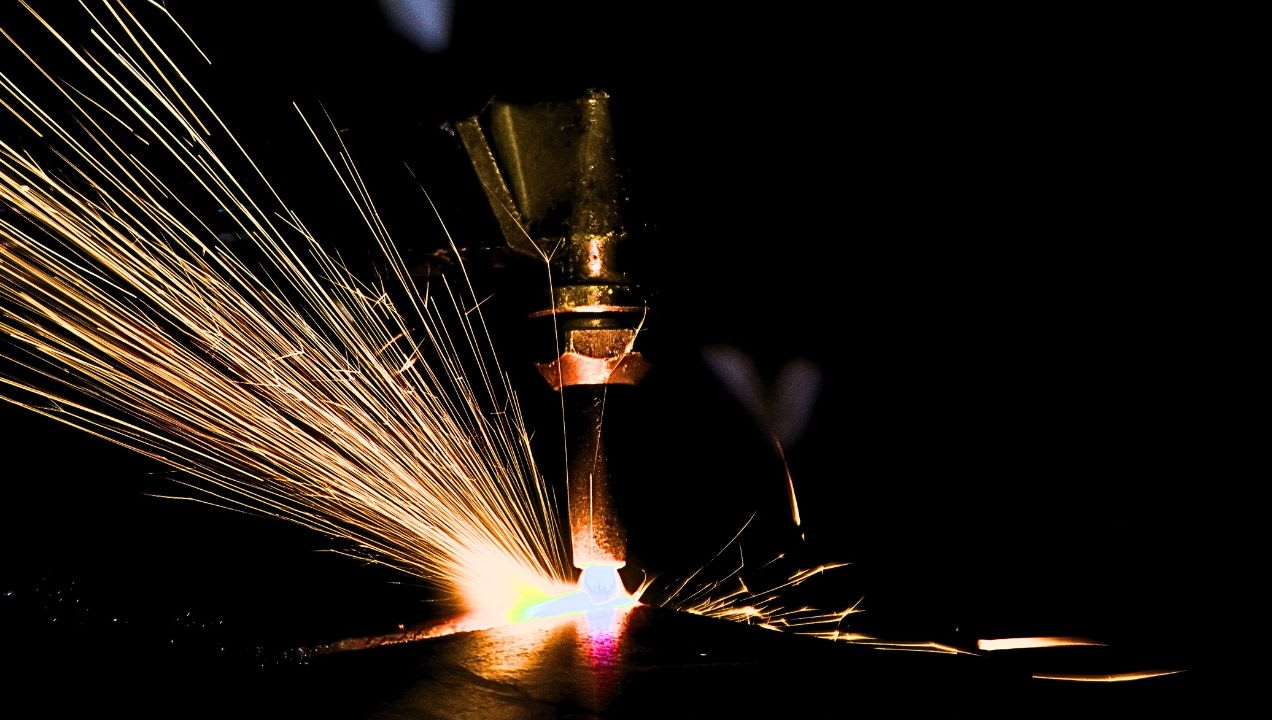
Since its inception, oxy-fuel has been a fundamental pillar in the metalworking industry, gradually evolving to meet the demands of precision, efficiency, and sustainability. Its ability to process heavy-gauge steels has positioned it as a key tool in the construction, heavy machinery manufacturing, automotive, household appliances, and aerospace sectors.
As manufacturing has integrated more advanced processes and new technologies, oxyfuel has evolved and incorporated new fuel gases and automation systems that optimize cut quality. Its integration with welding and metal forming makes it an essential resource for manufacturing structural components, industrial equipment, and conveyor systems.
Since its first applications, oxyfuel has undergone various stages of innovation. Initially, the process was carried out with manual torches, using mixtures of oxygen and acetylene that reached temperatures close to 3,150°C. Over time, the advent of pressure regulators and specialized nozzles improved flame stability and allowed for more uniform cuts in thicknesses more significant than 50 mm. During the second half of the 20th century, alternative gases such as propane and hydrogen began to gain relevance, reducing operating costs and improving combustion efficiency.
Numerical control
One of the most significant advances has been automation using computerized numerical control (CNC) systems. This has allowed for more precise control of the cutting path, optimizing times, and reducing material waste. Currently, CNC oxyfuel cutting equipment can reach speeds of up to 1,000 mm/min on 25 mm thick steels, maintaining clean cuts and minimizing slag generation. This precision is key in applications with tight dimensional tolerances, such as manufacturing structural components for bridges, buildings, and transportation equipment.
The development of hybrid systems has expanded the capabilities of oxyfuel, combining it with technologies such as plasma and laser. In industries where it is necessary to cut materials of different thicknesses and types, these combinations allow you to take advantage of the versatility of each technology. For example, in manufacturing agricultural and construction machinery, oxyfuel is used to cut thick pieces of structural steel. In contrast, plasma or lasers are used for thinner sections that require high precision. This integration streamlines workflow and reduces the need for additional finishing processes.
In the marine and infrastructure industry, oxyfuel is still the best choice for cutting thick steel plates used in shipbuilding, oil rigs, and support structures. Advances in high-efficiency nozzles have improved cut quality, minimizing the need for grinding before part assembly. In addition, its ability to generate clean edges facilitates the preparation of welded joints, improving the strength and durability of the structures.
Complementary processes
Welding is a process closely linked to oxyfuel, as many cut parts require assembly using joining techniques. Cutting precision directly influences weld quality, especially in applications requiring defect-free joints. In manufacturing chassis for commercial vehicles, for example, CNC oxyfuel makes producing parts with exact cuts possible, reducing the need for rectifications before welding. This speeds up production and ensures more substantial, more uniform structures.
Oxyfuel also plays a crucial role in the metal recycling and scrapping industry. Its ability to efficiently cut structural steel makes it an essential tool for dismantling heavy machinery, railroad cars, and disused metal structures. With more portable torches and automated regulation systems, operators can make precise cuts in complex environments without compromising safety.
In recent years, the environmental impact of oxy-fuel has been a topic of attention, leading to the development of more sustainable technologies. Systems such as HyCut, which uses hydrogen instead of acetylene, have reduced CO₂ emissions without compromising the process's efficiency. These advances have found applications in industries with high environmental standards, such as aerospace and the manufacture of electric vehicles, where the aim is to minimize the carbon footprint in production processes.
Advances in digitalization have also impacted the evolution of oxyfuel. Integrating computer-aided design and manufacturing (CAD/CAM) software allows for more efficient cut scheduling, optimizing material usage, and reducing human error. On the other hand, real-time monitoring sensors facilitate the detection of irregularities in the process, ensuring higher production quality. Incorporating these improvements has been especially useful in automated manufacturing plants, where resource optimization is a priority.
The future of oxyfuel is marked by greater automation and sustainability, with the development of more intelligent systems that optimize gas mixing and energy consumption. As companies are under more significant pressure to reduce costs and improve process efficiency, combining oxyfuel with advanced technologies will continue to be a key factor in manufacturing high-performance metal components.