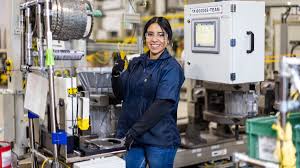
Transfer dies have established themselves as fundamental tools for manufacturing complex metal parts. These devices transform metal sheets into three-dimensional components through stamping processes that involve multiple serial operations. Unlike progressive dies, where the part advances on a single belt within the same die, in transfer dies, the part moves from one station to another independently, usually using mechanical, pneumatic, or servo-assisted systems.
The relevance of transfer dies lies in their ability to execute complex operations, such as deep drawing, punching, bending, and trimming, across multiple workstations. This versatility makes them essential tools in sectors that demand high precision and efficiency in producing metal components.
An outstanding example of the application of these dies, which has significantly developed in Mexico, is the automotive industry. In this sector, they manufacture structural parts of vehicles, such as body panels, doors, hoods, and roofs. The ability of transfer dies to handle high-strength materials and complex geometries makes them ideal for producing components that meet the stringent safety and performance standards required in automotive manufacturing.
The aerospace industry also benefits from the advantages offered by transfer dies. In this area, they are used to produce aircraft structural panels, metal cladding and housings, fasteners, and internal reinforcements. The accuracy and consistency provided by these dies are crucial to ensuring the integrity and safety of aircraft.
In the household appliances sector, transfer dies facilitate the mass production of metal components for devices such as washing machines, refrigerators, and ovens. Housings, exterior panels, doors, and internal structures are some elements manufactured using this technology, allowing companies to meet market demand with high-quality and durable products.
The construction industry also benefits from using transfer dies to manufacture metal elements, such as structural profiles, panels for facades and roofs, and components for ventilation and air conditioning systems. These dies allow the production of parts that meet the technical specifications required in infrastructure projects according to the resistance and functionality they demand.
Increased efficiency
In terms of productivity, transfer dies offer significant advantages. They allow multiple operations to be carried out on a single production line and optimize cycle times, consequently increasing the process's efficiency. This translates into greater production capacity and the reduction of operating costs, fundamental aspects of maintaining competitiveness in globalized markets.
The stamping dies and services sector has experienced remarkable growth in recent years. According to data from WiseGuyReports, the market size of stamping dies and operations was estimated at $26.3 billion in 2023. This growth reflects the growing demand for metal components in various industries and the adoption of advanced technologies in manufacturing processes.
In Mexico, the die-cutting industry presents a significant potential market. A study by the Government of Mexico indicates that the die-cutting sector has a potential market of 1,600 million dollars. However, it is not fully exploited due to the lack of human resources trained to develop this type of manufacturing. This situation represents an opportunity to strengthen training and technological development in the country, aiming to meet domestic demand and reduce dependence on imports.
The choice of machines used with transfer dies is crucial to maximizing production efficiency and quality. The most common presses are mechanical, hydraulic, and servo-assisted.
Due to their high speed and reliability, mechanical presses are ideal for cutting, bending, and drilling operations on parts with medium thicknesses and high production volumes.
Hydraulic presses offer greater control over stamping pressure and speed, making them suitable for deep drawing and forming processes of high-strength materials.
Servo-assisted presses, equipped with electric servo motors, allow precise control of the blow's speed and force, reduce die wear, and improve energy efficiency.
Product Diversity
The integration of automated transfer systems is another key aspect in optimizing die-cutting processes. These systems, which can be mechanical, pneumatic, or servo-assisted, move the parts between the different workstations, ensuring precise alignment and reducing manual handling time. This automation helps improve production consistency and minimize human error.
Implementing transfer dies in manufacturing processes also positively impacts material waste reduction. By optimizing the use of metal sheets and minimizing unnecessary cut-offs, greater efficiency in raw material consumption is achieved, which not only reduces production costs but also contributes to the environmental sustainability of industrial operations.
The trend towards automation and the adoption of advanced technologies in the metalworking industry has led to the development of more flexible and efficient transfer machines. These machines allow multiple tasks to be carried out sequentially on the same part, with great productivity.
In traditional transfer machines, each station has its spindle that performs a specific task at a time, and a transfer system moves fixed parts from one station to another. The parts transfer system can be designed in various configurations depending on the available plant space.
The evolution of transfer dies, and associated machines have allowed companies to adapt to new market demands, which demand high-quality products manufactured efficiently and sustainably. The ability to produce complex parts with tight tolerances and high volumes has driven the growth of industries such as automotive, aerospace, and home appliances.
Transfer dies play a fundamental role in the metalworking industry. They maximize efficiency and precision in producing complex metal components.
Its application in key industry sectors, together with the development of advanced technologies and process automation, improves productivity by reducing production costs and meeting the growing demands of metalworking in Mexico.