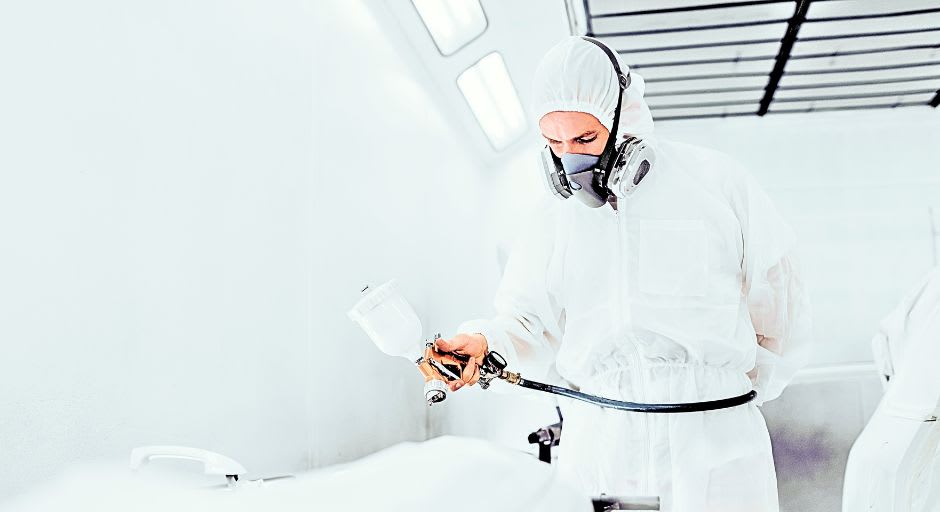
Filtration systems in paint cabins are key to ensuring a safe environment, complying with environmental regulations, and improving the quality of finishes. With advanced technologies, they control pollutants, optimize operating costs, and increase industrial sustainability.
In metalworking manufacturing, the painting process adds aesthetic value to products and plays a critical role in their durability, strength, and market acceptance.
This final step in the production chain requires meticulous attention and the incorporation of advanced technology to ensure consistent, high-quality results. A well-designed and installed paint booth ensures superior finishes, protects workers' health, reduces operating costs, and contributes to compliance with increasingly stringent environmental regulations.
Paint booths must have efficient filtration systems to handle dust particles and mists generated during application. These systems are essential for maintaining a safe workplace environment, as airborne pollutants, especially volatile organic compounds (VOCs), can harm operators' health. In addition, a proper filtration system prevents air impurities from affecting the quality of the final finish, which could lead to rejects or costly rework.
You may be interested in: Adapting metal components for electric cars
Selective systems
Various technologies are available to manage these challenges. Cartridge and bag filters are widely used to capture dust particles, while wet filtration systems employ water curtains to trap suspended particles.
Other systems include HEPA (High-Efficiency Particulate Air) and ULPA (Ultra-Low Penetration Air) filters, which offer advanced capabilities for capturing ultra fine particles. Technologies such as thermal and catalytic oxidation are designed to efficiently remove VOCs and thus comply with the strictest environmental regulations. On the other hand, air recirculation systems reduce emissions and energy consumption, improving the process's sustainability.
Well-regulated air
The regulations related to paint booths regulate both occupational health and the environmental impact of these processes. In Mexico, standards such as NOM-010-STPS-2014 require implementing systems that control workplace exposure to chemical agents, while NOM-001-SEMARNAT-2021 establishes specific limits for emissions from fixed sources.
At the international level, standards such as ISO 16890 seek to ensure the efficiency of air filters, and ISO 14001 encourages implementing environmental management systems that integrate sustainability into industrial operations. These regulations were designed to protect workers and the environment and drive companies to adopt more advanced and efficient technologies.
High Specialty
Deciding whether to perform the painting process in-house or outsource it is a strategic consideration that depends on the production volume, specific finish requirements, and available resources.
A well-equipped in-house paint booth can offer greater control and reduce costs in the long run for specialized or large-scale operations. However, in cases where the process is less frequent or requires complex equipment, a more cost-effective solution can be to turn to specialized third parties.
Technological improvements in filtration systems undoubtedly affect the operating capabilities of paint booths. IoT sensors, for example, allow real-time monitoring of air quality and filter status, facilitating more efficient maintenance and reducing downtime.
Self-cleaning filters, which use compressed air to remove accumulated particles, extend the system's life and improve performance. In addition, energy recovery plants optimize energy consumption by reusing the heat generated during drying.
Trends in this sector point towards greater automation and sustainability. Companies are adopting systems integrating digital technologies to manage operations remotely and in real-time. Filtration materials also evolve towards more sustainable options, such as biopolymers, which reduce environmental impact. On the other hand, the modular and scalable design of booths allows companies to adapt quickly to changes in demand or regulations.
Decision-makers in the metalworking industry must consider several factors when evaluating the investment in paint booths. These include regulatory compliance, the ability of filtration systems to handle process-specific contaminants, and long-term return on investment. In addition, these specialists work to understand the technical capabilities of the available technologies and keep abreast of emerging trends.
Filtration systems in the painting areas are designed and developed to achieve excellent occupational safety, comply with environmental care requirements (whose regulations are increasingly strict), and contribute to operational efficiency by maintaining the equipment's condition. Well-installed paint booths equipped with advanced technology represent an operational necessity and a strategic opportunity for metalworking companies. With proper design and careful selection of technologies, these facilities can ensure optimal performance, reduce costs, and strengthen the industry's commitment to sustainability and excellence.
Applicable regulations
Regulations for paint booths cover both environmental protection and worker safety. Some of these are:
NOM-010-STPS-2014:
It regulates exposure to chemical agents in the work environment.
Proper extraction systems are required to control vapors and particles.
NOM-001-SEMARNAT-2021:
It establishes limits on emissions into the atmosphere from fixed sources.
Applies specifically to volatile organic compounds generated by paints.
ISO 16890:
Defines standards for air filter efficiency, ensuring effective particulate control.
ISO 14001 y 45001:
They promote environmental management and occupational safety systems, including hazardous waste management.
Local Civil Protection Regulations:
They include ventilation requirements, flammable materials handling, and fire protection systems.